이 글 목차
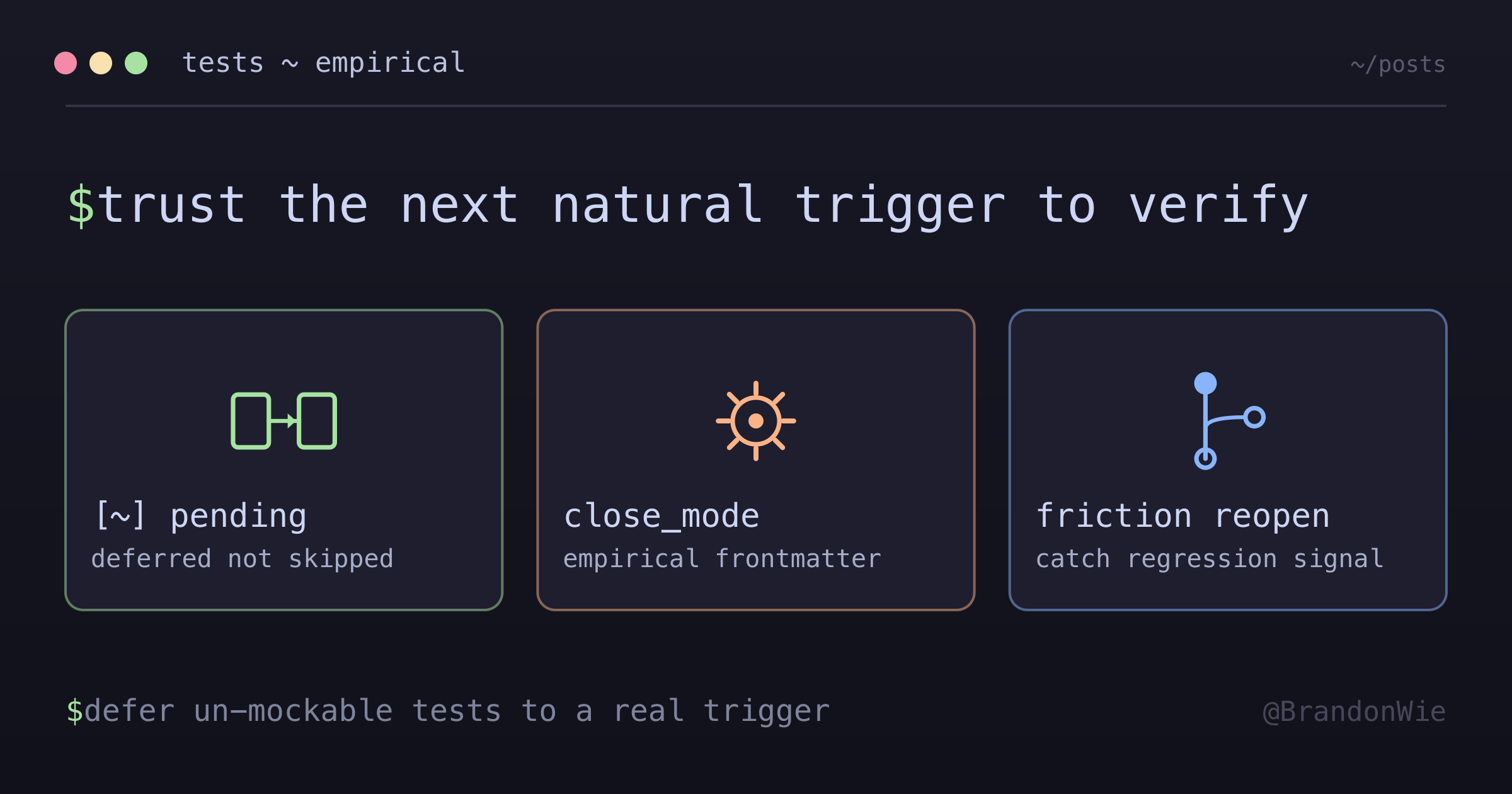
Empirical Close: 자연스러운 trigger에 skill-side test를 맡기기
어떤 verification test는 fixture로 충실히 재현되지 않는 진짜 trigger가 필요해요 — 대화형 prompt, 대화 파싱, AskUserQuestion flow. test를 [~] empirical-close-pending으로 표시하고 다음 자연스러운 trigger가 verify해 주리라 믿는 건, friction-log reopen과 짝지을 때 위생적인 선택이에요.
wrap-followup-persistence-fix 작업을 닫으려는데 test 두 개가 끝까지 안
풀렸어요. 19개 중 17개는 통과, 두 개는 fixture로 재현이 안 되는 종류였어요.
진짜 대화 안에서 “next session: do X” 같은 follow-up이 발생해야 검증되는
skill-side 동작이었거든요. 어떻게든 close해야 하는데, 거짓 trigger를
짜내자니 session state가 오염되고, 그렇다고 task를 열어두자니 7일 뒤 stale
경고로 dashboard만 어지럽혀요. 결국 세 번째 길로 갔어요.
세 번째 길이 이 글이 정리하려는 패턴이에요.
닫는 방법은 셋, 결과는 다 달라요
단위 mock으로는 못 잡는 검증 test의 경우, 닫는 경로가 세 갈래로 갈려요.
- Force staging — 가짜 trigger를 끼워 넣어 지금 당장 돌려요. 진짜 session 상태를 오염시키고, 억지로 만든 fixture는 실제 입력 모양과 어긋나기 일쑤예요.
- Defer + leave open — task folder를
actives/에 그대로 두고 7일 뒤 stale 경고를 받아요. 잊혀진 task가 쌓이고 dashboard에 잡음만 늘어요. - Empirical close — test를
[~] empirical-close-pending으로 표시한 다음, task는 그대로 archive해요. 다음에 자연스럽게 그 trigger가 일어날 때 검증되리라 믿고, 이상이 보이면 friction log로 다시 열어요.
3번에 대한 명시적 패턴이 없으면, mock이 안 되는 test가 끼어 있는 task는 영원히 반쯤 닫힌 채 앉아 있거나, 충실하지 않은 fixture로 억지로 staging 당해요.
세 옵션, 나란히
| 옵션 | 장점 | 단점 |
|---|---|---|
| Force staging now | close 시점에 test green; 명시적 검증 | session state 오염; fixture ≠ 현실; 복원 비용 |
| Defer + leave open | 인위적 trick 없음 | 7일 stale 경고; dashboard noise; 잊혀진 task 위험 |
| Empirical close | trick 없음 + folder 닫힘 + 신호 보존 | 신뢰 필요; reopen 메커니즘 필요 |
trigger가 본래 자연 발생만 가능한 종류라면(예: 진짜 대화에서 나온 “next session: do X” — 어떤 fixture로도 충실히 재현이 안 되는) 그리고 friction-log reopen이 뒤를 받쳐 주면, empirical close가 제일 깔끔해요. 비용은 신뢰 보정이고, 얻는 건 충실하지 못한 test 없이도 task가 위생적으로 닫힌다는 점이에요.
패턴이 명시되기 전엔 어디서 어긋났나
이름이 없을 때 지저분해진 지점이 네 군데 있었어요.
- “skip”과의 구별.
[-]skipped는 “test 안 하기로 결정”,[~]empirical-close-pending은 “자연 발생 trigger에 미룸”이에요. 구별이 없으면 archive가 그냥 포기처럼 보여요. - reopen 메커니즘이 명시되지 않아요. 미뤄둔 test의 failure mode와 맞물리는 regression을 잡도록 friction log를 미리 엮어두지 않으면, empirical close는 결국 “지우고 기도하기”로 변해요.
- 신뢰 보정. 어떤 경로의 첫 instance에는 명시적 검증이 필요해요. empirical은 design이 한 번 검증된 뒤의 후속 iteration에 적용하는 거예요. 처음 만드는 경로에 empirical을 잘못 끼우면 기반 점검을 통째로 건너뛰게 돼요.
- 도구 표류. /wrap과 /archive-task는 처음에
[~]close 상태를 몰라서 에러를 내거나 blocking으로 처리했어요. 패턴이 의도를 전달하려면 frontmatter에close_mode: empirical과close_notes:가 같이 와야 해요.
4단계 패턴
task의
todos.md에 test를 표시:- [~] **Test N — {name}**: empirical close pending (YYYY-MM-DD). {Why no unit coverage}. Will exercise on next natural {trigger}. Reopen via friction log if {failure mode} occurs.task frontmatter 설정:
status: completed close_mode: empirical close_notes: | {N/total} done; {M} empirical close pending (Tests X+Y). Reopen if {regression signal}./archive-task로 평소처럼 archive. empirical 신호를 기다린다고 folder를 열어두지 마세요. 그건 그냥 stale folder예요.reopen 메커니즘을 미리 엮어두기: archive 후에 regression 신호가 나타나면 fire되는 friction-log 패턴이나 /wrap 경고를 추가해 둬요.
제 개인 tooling repo에 있는 wrap-followup-persistence-fix close-out
(2026-04-30)의 실제 예시예요. /wrap skill이 session 사이로 follow-up을
넘겨받게 만든 작업이고, Test 4와 5는 deferred 상태로 나갔어요.
- [~] **Test 4 — Conversation extraction**: empirical close pending
  (2026-04-30). Skill-side (Step 5.65), no unit coverage. Will exercise on next
  natural /wrap that has a conversation-only follow-up. Reopen via friction log
  if Step 5.65 fails to persist a real candidate.
- [~] **Test 5 — Loss audit**: empirical close pending (2026-04-30). Skill-side
  (Step 9). Pair with Test 4 — first time user chooses "Skip" on a real Step
  5.65 candidate, verify Step 9 lists it under "potentially-lost".
같이 들어간 frontmatter:
status: completed
close_mode: empirical
close_notes: |
  17/19 done; 2 [~] empirical-close pending (Tests 4+5). Reopen via
  friction log if Step 5.65 fails on a real conversation-only follow-up.
어떤 상황에 맞나
empirical close가 어울리는 자리는 이런 경우예요.
- 대화 맥락이 있어야 하는 skill-side 동작 test — 예를 들어 wrap의 Step 5.65 대화 추출은 채팅 도중에 진짜로 “next session: do X”가 나와야 발동해요.
- AskUserQuestion flow — prompt를 인위적으로 띄우고 답을 강제로 채워 넣는 방식으로는 실제 UX가 검증되지 않아요.
- 부수효과를 되돌리는 비용이 production에서 regression을 잡는 비용보다 더 큰 side-effect test.
- post-merge close — PR이 merge되고 branch가 사라졌으면 마지막 smoke가 돌았든 안 돌았든 task는 끝난 거예요(2026-04-30 embed-interview close에서 뽑힌 휴리스틱).
반대로 이런 경우에는 쓰지 않아요. regression-critical 경로(payment, auth, data integrity — 이건 무조건 test를 강제), 보안 test(여기서는 empirical 신호를 절대 신뢰하지 않아요), unit-mock이 가능한 test(mock이 가능하면 unit test를 그냥 작성하는 게 답이에요. empirical close는 mock 자체가 불가능한 영역의 fallback이에요), 그리고 어떤 경로를 처음 만드는 시점(첫 instance에는 명시적 검증이 필요해요. design이 검증된 뒤에야 empirical을 후속 iteration에 적용해요).
실용적인 takeaway
Empirical close는 task 위생이지 test 게으름이 아니에요. test는 그대로 존재해요. 다만 fixture가 아니라 production에서 실행될 뿐이에요. test를 안 돌리는 대안은 task의 존재 자체를 잊는 거고요. 모든 empirical close는 friction-log reopen 패턴과 짝지어 두세요. 그게 빠지면 empirical close는 “지우고 기도하기”가 돼요. post-merge 변형(PR-merged + branch-gone = task done)은 같은 패턴을 test 상태가 아니라 merge 상태에 적용한 거예요. 둘 다 결국, 그 자리의 확신보다 더 오래 가는 신호를 믿는 쪽으로 무게를 옮긴 셈이에요.